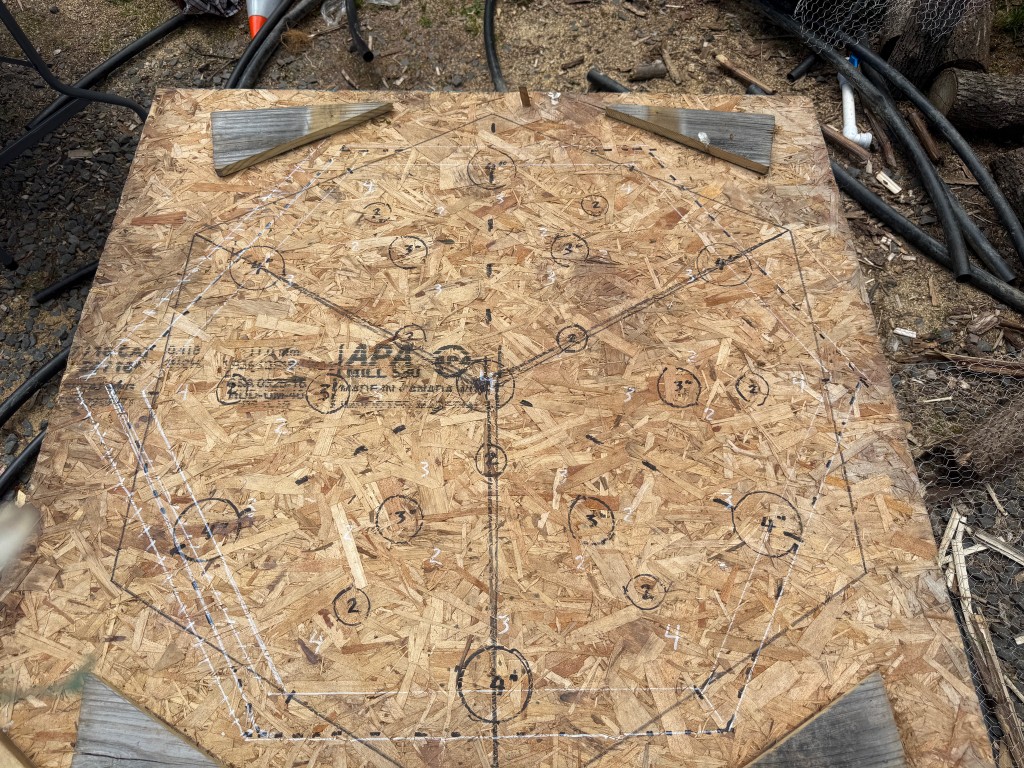
DeJoux House
A hands-on design/build session at DeJoux House — participants assembled modular rafts from local biomaterials and planted willow and sedge for oxbow installation.
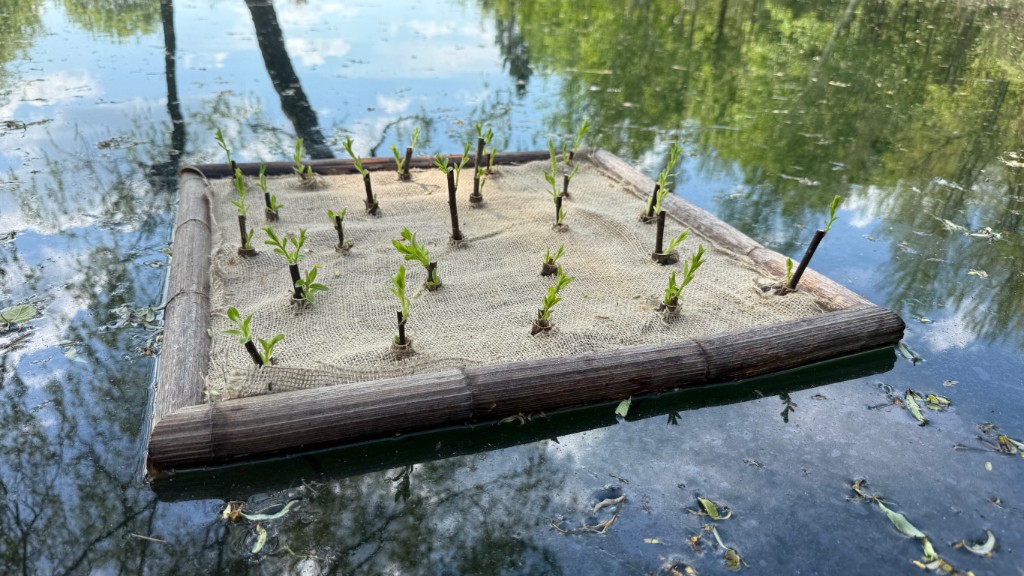
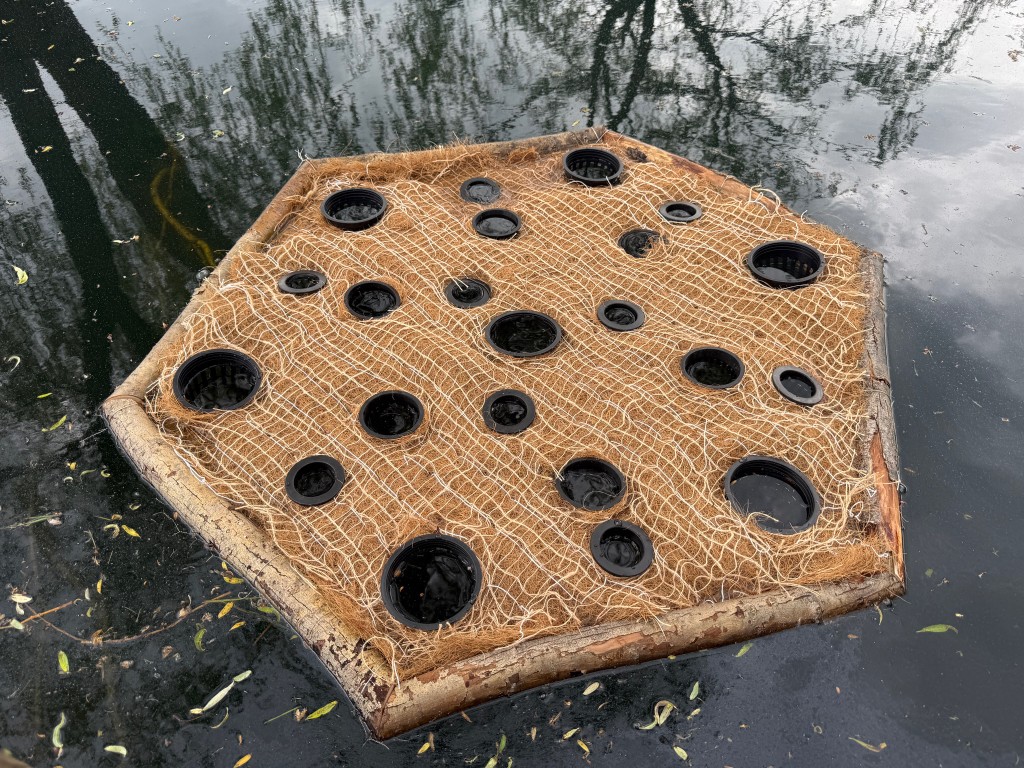
It's a raft growing plants that help clean water — a Floating Treatment Wetland.
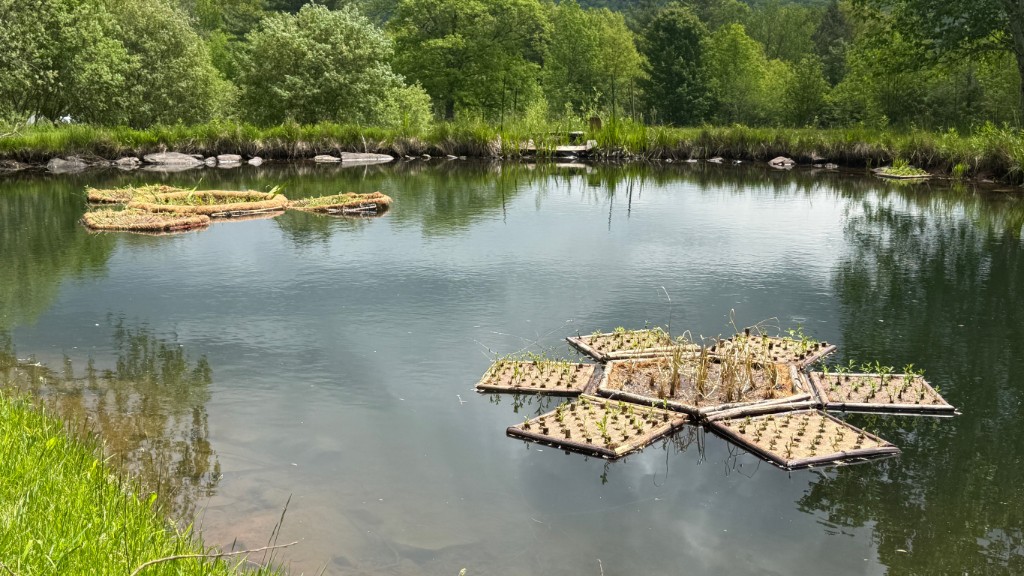
A hands-on design/build session at DeJoux House — participants assembled modular rafts from local biomaterials and planted willow and sedge for oxbow installation.
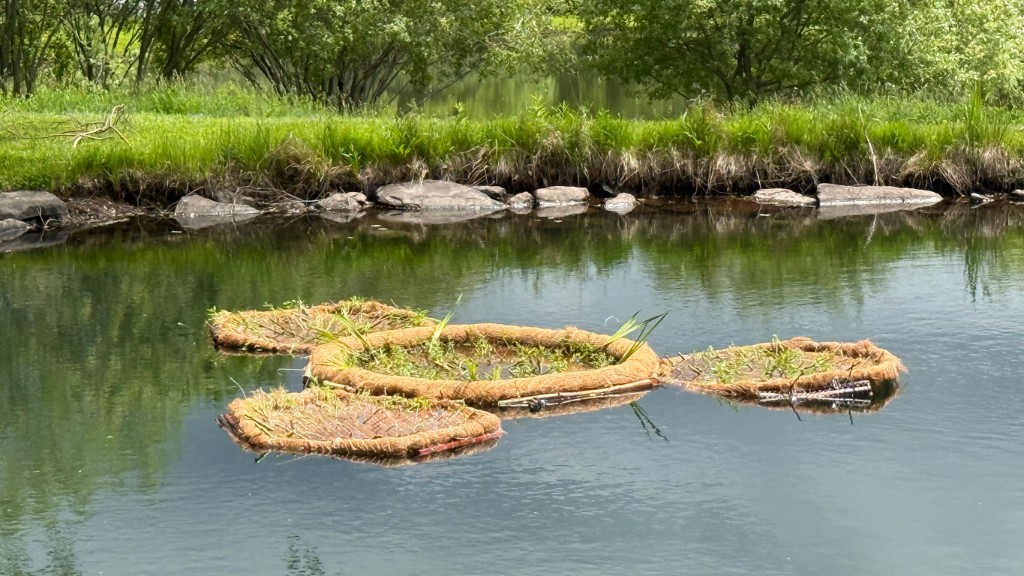
Prototype build and install in sanctuary oxbow ponds with Wallkill Valley Land Trust stewards and New Paltz neighbors — covering materials, plant species, water testing, and site care.
Bring a hands-on Floating Treatment Wetland session to your watershed group, school, land trust, or community — we’ll tailor materials, scale, and site to the water you steward.
Get in touchPart of Wallkill Futures at Unison Arts, opening July 2026.
Suspended above the deepest part of the oxbow and anchored to bottom and shore, it can adjust to fluctuating water levels and flows. Below the surface, the roots develop a biofilm of bacteria and fungi that help absorb nutrients like nitrogen and phosphorus that can feed harmful algae, as well as heavy metals and other potential contaminants. In fall, the biomass is harvested and reused for other ecological projects, as part of a low-maintenance system that supports the health of the Wallkill River and watershed. These modular prototypes were designed by FICTILIS using locally abundant biomaterials, and installed as a research project in partnership with Wallkill Valley Land Trust and with permission from adjacent property owners.
Floating Treatment Wetlands are small, raft-like buoyant structures that mitigate nutrient and chemical pollution through root and microbial uptake — reducing algae and harmful bacteria, turning nutrients into usable, sequestrable biomass, and providing wildlife habitat and a self-watering growing medium for native sedges, willow, and other species used in riparian restoration.
The Wallkill has no single big polluter. Instead it suffers a death by a thousand cuts — arsenic leaching from natural mineral deposits, stormwater carrying nutrients, salts, and pesticides off streets and farms, leaking septic and sewage adding bacterial contamination, and climate change plus excess nutrients fueling toxic algae blooms.
Drawn from Bard Center for Environmental Policy (CEP) material.
We're studying locally sourced, low-cost designs for scalable Floating Treatment Wetlands — for harmful-algae-bloom prevention, stormwater and wastewater pollution, pre- and post-treatment of agricultural irrigation and runoff, and other remediation of rural and urban waters. Our prototypes use abundant local biomaterials, including pontoons made from harvested Japanese knotweed, and draw on ancient Meso-American floating-garden methods — re-cultivating a local aquacultural tradition. Each fall the growth is harvested and put back to work in riparian planting elsewhere.
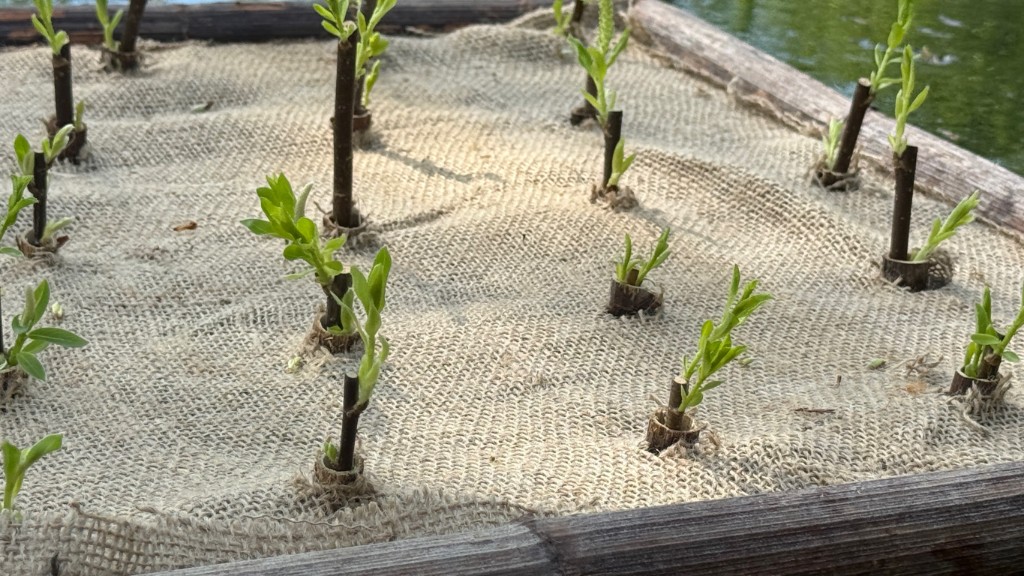
For as long as people have lived in this valley, some of them have lived at its edges — in the swampy lowlands no one else wanted. Near Kingston they were called the Binnewaters, or "Eaglenesters"; across the river, the Taghkanic basketmakers. They were people of Lenape, African, and Dutch descent whose origins got deliberately blurred by the people around them, and who lived on what the wet margins gave them: fish, foraged food, and baskets woven from willow and splint cut at the water's edge. For it they were slurred, studied as if they were defective stock, and written off as a vanishing kind. They didn't vanish. They kept weaving, and kept their footing in the low wet places, generation after generation. When we gather to build floating wetlands out of local willow, we're working in that long tradition — people at the margins, making something useful with the plants of the marsh, together.